





Vapour Permeability
Vapour permeability, or "Breathability" in a building refers to the ease with which water vapour passes through building elements. Building elements where vapour permeability is poorly designed can result in condensation, leading to unhealthy living environments and degradation of fabric.
Vapour permeability can be expressed in several ways:
- vapour resistivity of a material, measured in GNs/kgm (giga Newton seconds per kilogram metre) or MNs/gm (mega Newton seconds per gram metre)
- vapour resistance for a given thickness of material, in GNs/kg or MNs/g
- vapour resistance factor, also known as th µ-value, which is the resistivity of a material relative to that of still air. It is a factor, and has no units.
- "perms", short for permeability, used commonly in North America, measured in grains/(ft2 ·h·inHg)
[edit] Related articles on Designing Buildings Wiki
Featured articles
Check out some of the best features and news from Designing Buildings as well as key stories from around the web.
Mayors are to be given planning call in powers

Mayors across England will be able to make the most important planning decisions.

The Master Builder: William Butterfield and his times. Book review.

Why construction can't afford to ignore the skills gap.
Building Safety Regulator, 19 August

Gill Kernick appointed Independent Chair of Residents’ Panel.
Connecting knowledge, technology and conservation
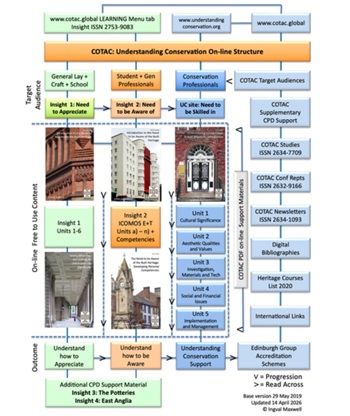
Building competence for the future of built heritage.
Building Regulations and Building Safety Act

CIOB publishes free advice for non-domestic clients.

Building Safety Newsletter from MHCLG.

An extraordinary record of steel engineering worldwide.

Households living near new pylons to save on bills.

ECA warns growth must not outpace grid capacity or skills.
The role of the client and decision making

CIOB response to built environment professions call for evidence.
Construction's sustainability reporting revolution
Tracking upfront embodied carbon with digital tools.